Tuesday, May 12, 2015

TeleNet

There was a time when a gentle men could get on the radio and tell a story to the masses, a story about aliens that would bring chaos to a society. When the radio was still the prominent form of entertainment a man told a story to people about aliens raining from the sky an they actually believed him. These people poured into the streets in fear the aliens where coming down to take over. That was entertainment then. After that came the tele, I can't believe people sat around a gauked at a colourful picture box for hours, my have three times changed.

The television stands as the dominant in home visual entertainment form right? The internet has been making a gradual take over for the past decade. The evolving of things like YouTube and Vimeo video entertainment hubs has put a change on the way people look for entertainment in house.

Netflix has sparked the next era of video viewer ship. It's now normal to watch an entire season of a show in a day. 21 episodes of a 21 min show, all consumed in one afternoon. Just about every major television program provider has made they're major content available online.

The question is this healthy, is it okay to watch an entire story of developed characters and growing universe's in one afternoon. Yes, you do it to a movie.

This adds more time to watch more content making more room for more content to be created more quickly.

Visual virus

The News is poison. Not to be to much of a conspiracy theorist but as much we all know the media is controlled by our government, some of us don't know how much.

The News is literally brain washing. All news is bias, but there's a point before people put their own interpretation of events into the mix.  What you have is this. An event takes place depending upon the place and victims of said event the media or "news" will determine how they are going to intensify said story; whether it be earthquakes in Nepal or riots in urban areas.
An event such as an earthquake is out of man's control, making it an event no one can be blamed for. If there's no one to blame or potentially blame there's no person vs person conflict. People don't find interest in man vs. nature conflict unless it's on their front step.

If the media can't make it matter to you them they don't over dramatize it.

I have no personal biases or feelings to any events taking place in Baltimore or Ferguson. The news immediately changes the perception of what the viewer sees. The viewer never gets to interpret it for themselves. The problem with that is if they portrayed it more negative than its actuality then that's almost fictional and instigation.

The media will forever be a major misconception based on feeding you false information.

Music Interpretation

Music has been around for a very long time. For the each decade has it's own sound and it's always said that "oh my generations music is far superior to yours". Can one generation of music really be better than the next?

   From about the 20s up into 70s music was changes drastically, each era having it's own touch on music would while creating genres in the process. Music is typically based on the contents of the writers life meaning it would directly reflect on the era. The depression era directly relates to jazz, blues because the sad, depressed mood of the world at the time. The point is the music from each era is reflective of what was happening at the time. The things that happened in these era were not necessarily important but they were  impactive, enough to mean something. Events during these time completely drove people's lives. There isn't nearly enough going on now for people to wanna write music about. Not only that but theres a lot less worry than ever before. Not to stray too far off topic but music is definitively not as good as it used to be plain and simple. That just encompasses 90 percent of music.

Tuesday, May 5, 2015

Patrick Q

To add to what Anthony posted, the people who are gaining from  the military industrial complex and most other disasters and problems are the same people who control and own the media. they influence government policies that enable them to continue to pillage our country.  these "policies" that are recently unconstitutional are printed on paper and displayed on the internet for all to see. yet why is it that only a small percent of the population are aware of these atrocities? the media spins a captivating web to ensnare the masses, and the more illiterate a person is, the easer they are to trick and control.
they separate society by constantly race bating, making it easer for a person who is uninformed to get angry and choose a side, playing right into the lie. its not just news stations that are weaving the lie. the countless amount of mind numbing shows that people cant live without is absurd. not to mention how many people are sucking into sports and espn to a point that it drives their lives, but at least thats better than watching a fake more drama full version or people lives that in no way relevant and betters the viewer as a person in no way, shape, or form.  

Saturday, May 2, 2015

Media Interpretation

The media today is about delivering information. The media is for everyone, right?

There is so much media in the world especially on the web. With all media on the internet there's a message to convey. Each piece of media has a different target audience. In many cases said target audience will comprehend the subject matter most appropriately based the specific information included. For example, not to be sexist but a makeup tutorial on YouTube would be targeted at females ill equipped with makeup dressing skills.  Said female group would essentially take the info and likely learn from it.  Any other audience or other group would interpret it differently.  A more experienced female would  be inclined to find mistakes in the video, versus learning from the content. My point is each piece of media is tailored to a specific type of person, and when it's presented to others  the message is different. This is a problem. When you have important information that informs on a current event or issue, it needs to be presented clearly the way it occurred. Not should be told the way it happened but told with no bias. No person sided on a event should tell a story to the public with out all it's information or  personal connection. These misconception power most 🌎 problems. It's the misinterpretation and ill conveyance of a issue the power all issue. So at least on the media who should delegate the flow of information, a biased higher power with hidden agendas, the biased people who want more for themselves,  or no one? I think no one. I believe it's the responsibility, not the choice of each individual, the responsibility of each individual that travels into the vast media hub of the world to educate yourself to point where your capable of making logically, ethical analysis on what you take in. If people did this it would not stop all problems, that's impossible. What it would do is prevent larger scale ethical conflicts around the world. Conclusion people need to educate themselves and think about the bigger picture.

Tuesday, April 28, 2015

Technology affecting Society


        Throughout the last few decades, technology has been advancing in many ways that have been negatively impacting our society. The addiction to social media has escalated significantly. Social media sites such as Facebook result in inarticulate and unintelligent people. People expect instant gratification when messaging or commenting to another individual. This has made society much more impatient. Rather than writing letters, we just expect to be answered right away on the internet, which is much faster. Another impact of technology is the way it is affecting children and there mental growth. Much less kids play outside nowadays. They are to consumed in video games, television, and social media. This causes them to lack creativity, and exercise. Video games also result in more violent minded children. Texting is causing people to no longer talk on the phone, this is resulting in people becoming more socially awkward, and less professional when they are face to face with people.

Media and Society


me·di·a1

ˈmēdēə/
noun
1
plural form of medium.
2
the main means of mass communication (especially television, radio, newspapers, and the Internet) regarded collectively.
"the campaign won media attention"

synonyms:the press, the fourth estate, the news, the papers;
broadcasting, publishing
"the media went wild with the story of the singer's arrest"

so·ci·e·ty
  1. 1
    the aggregate of people living together in a more or less ordered community.
    "drugs, crime, and other dangers to society"
    synonyms:the community, the (general) public, the people, the population;


To me media and society is how both effect each other. There are numerous forms of media new and old, even oral communication, which before this class I never would have considered media. There are also numerous types of societies. There wouldn't be media without society, but would there be societies without media? If so what would that be like? How dull, boring and quiet that world would be. So maybe there wouldn't be a society without media. This doesn't seem like something we will ever experience, media is constantly changing and adapting to our evolving world and people rely on it so the demand is there too. Media and society has become social media, so what's next?

Mass Media Influence on Society

Over the last couple hundred years, the influence of mass media has grown exponentially with the advance of technology. At first there were books, then newspapers, magazines, photography, films, radio, television, the so-called New Media of the internet, and now social media. 'Today, just about everyone depends on information and communication to keep their lives moving through daily activities like work, education, health care, leisure activities, entertainment, traveling, personal relationships, and the other stuff with which we are involved.' 'It's not unusual to wake up, check the cellphone for messages and notifications, look at the TV or newspaper for news, commute to work, read emails, take meetings and makes phone calls, eat meals with friends and family, and make decisions based on the information that we gather from those mass media and interpersonal media sources.' Every morning I will wake up check my phone, watch the news for a little while and then go on the computer. I go through this cycle every morning pretty much. It is routine.


http://www2.uncp.edu/home/acurtis/Courses/ResourcesForCourses/Media&Society/MassMediaInfluenceOnSociety.html

https://www.youtube.com/watch?v=XgHQG3oD5p0  

Wednesday, April 22, 2015

Media: The Second God???

In class a few weeks ago, we were discussing a book called, Media, The Second God. I completely understand that we live in a day-in-age were we depend on the media for information, but unfortunately, there is no doubt in my mind that media is not the second. The difference between media, and God is that media is made by man, and God is a Spirit. In the first chapter of the book, it talks about how media is with us everywhere we go. But I've immediately notice that-that statement is completely false. Why, because if I've decided to go to an isolated island by myself, media is clearly not around. God on the other hand, is everywhere we go, and even if we are not in the site of man. There was also a statement in the book the same programs can be on television. But, what they failed to realize is that there is also a delay. I know this to be fact because when i was on the phone with my cousin, and we were watching the same television show, my TV show was seconds a head of her's. So, God on the other hand is omnipresent, there are no delays in the works of God.

Monday, April 20, 2015

Star Wars Droids: An AI Robot scenario

People today ask what will happen when we give AI to robots high enough to become sentient beings. Terminator and Odyssey 2000 bring the worst case if we let it unregulated, but Star Wars may show the best outcome of the situation


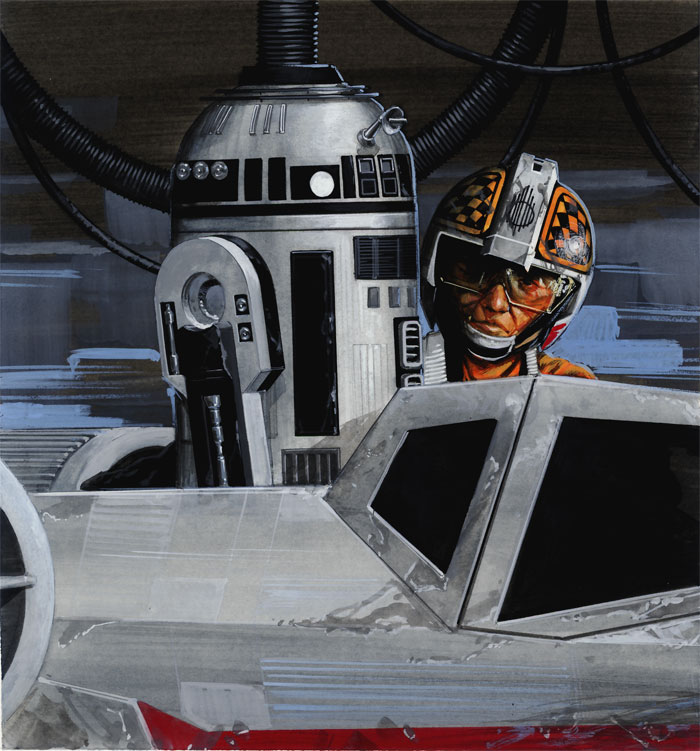
An R8-Series Astromech Droid being loaded into an X-Wing
Astromech droids are sapient beings who are not only good companions but helpful and can even fix ships and navigate, also they can use multiple utilities for purposes beyond the shipyard, perhaps with AI in robots we can have loyal mechanical pets who can fix our cars, another example of friendly AIs in Star Wars are Protocol Droids

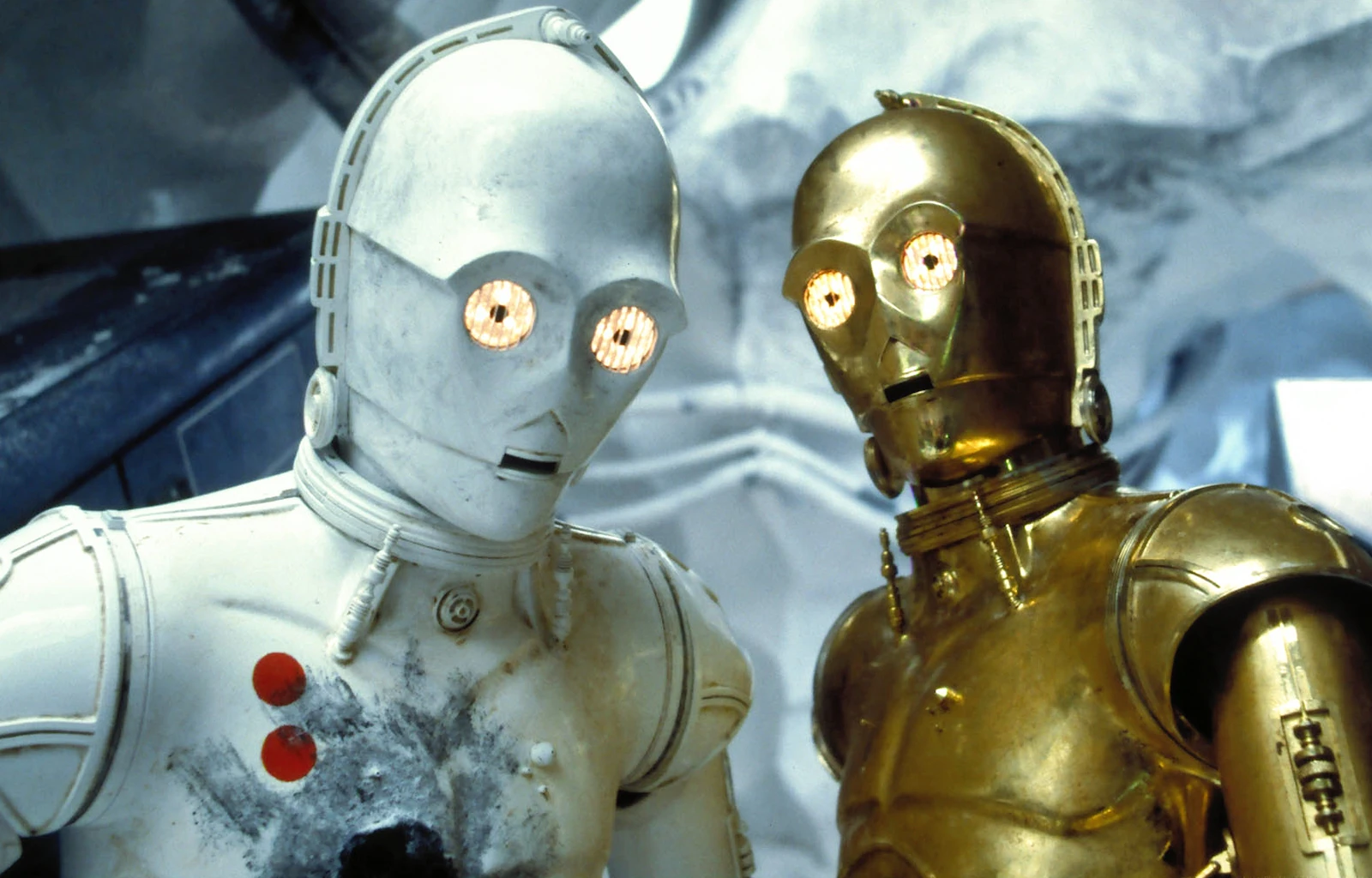
C-3PO (Gold) and K-3PO (White) are both Protocol Droids, meant for serving, translating, and so on
Protocol droids were designed to be translators for droids who use droidspeak (droid language like astromech droids), alien languages, and also double as domestic servants around the household, or some cases offer repair or military files (K-3PO served as basically an intern unit for the rebel alliance, keeping files stored in his databank but also ironically gave him enough knowledge to devise battle tactics.) they only ask for respect and used wisely and fairly, but some like C-3PO are rather too timid to make such a demand (which brings the question of robot-rights, but that is another subject), all these can be useful in business and home

these droids can be proof that if we are wise with giving robots sapient AI we might be able to also have them not only as servants, but loyal companions

Sunday, April 19, 2015

Games affect the developing brains of children and teens.

At age 17, Anthony Rosner of London, England, was a hero in the World of Warcraft online gaming community. He built empires, led raids, and submerged himself in a fantasy world that seemingly fulfilled his every need. Meanwhile, his real life was virtually nonexistent. He neglected his school work, relationships, health, even his hygiene” 

This is just one example of how gaming affects teenagers and all aspect of their lives. This article discusses how “9 out of 10 children plays video games, this is 64 million kids” It has been proven that individuals that game excessively rewire their brain before the age of 21 or 22. There was a research conducted in China that studies the brain of 18 college students who spend 10 hours on online playing games like World of Warcraft. “Compared with a control group who spent less than two hours a day online, gamers had less gray matter (the thinking part of the brain)”

My stepson is currently 24 years old. I could remember when he first became a gamer at the age of 18. We have seen a drastic change in his drive and determination to achieve anything. He is a graduate of Dutchess Community College however since he graduated he spend hour upon up hours in his bedroom gaming. We have also seen a change in his attitude toward any involvement with family issues. I do feel that there are some positive effects of gaming however the negative effect subsidies them. The negative effects like poor schoolwork and argumentativeness, poor concentration, increased depression and anxiety, attention deficit and impulsiveness, and physical health issues.


Wednesday, April 15, 2015

Less or more intelligent?

We have discussed in class about how its a debate on whether technology is making us less intelligent or not. My personal belief on this we are not becoming any less intelligent as all, maybe even more intelligent. Points have been made that while we once needed to pick up a dictionary to look up  a word and we know can just google search (now even just ask our phones with voice searching) what it means and that is making us less intelligent. I say that we are not getting less intelligent we are just adapting to the ways of modern technology, we now have the knowledge of how to operate these phones and be able to google search the definition to that word. Put an iPhone that has one button and is all touch screen in the hands of someone from the 19th century and ask them use it, they would have no clue what they were even looking at. In addition to that, we have people who have to program the software behind these technologies, someone had to have come up with the aforementioned google voice searching, I don't know who or what group of people came up with that (but i can google search it) but thats a pretty inventive technology, I'd say they are pretty intelligent.

Tuesday, April 14, 2015

AI Takes Over The World

Artificial Intelligence is intelligence created by a robot or a machine. This idea has been floating around society since computers were invented. This is the idea of robots and machines finally becoming independent minds in our society. Just like everything, there are pros and cons to this concept.

The positive outcomes of artificial intelligence could range from small to large. A very basic, but efficent method of something simple like cleaning a house or doing chores could be a positive outcome. Humans would be able to focus on other, more time consuming tasks; the more desirable tasks would become higher quality because of more time spent on each. Another plus would be on a larger scale. The world's most dangerous tasks could be completed without any harm to human beings. Jobs like coal mining, high risk military tasks, etc. Lives would be saved and so would time.

The negatives of artificial intelligence are more significant and outweigh the positives. First of all, many jobs would be taken and the unemployment rate would increase. Secondly, just like in science fiction films, it would be possible that a man vs. machine war could be possible. One intelligent robot could decide they are tired of humans and act on it. Lastly, if everything does actually work, the human species would probably become even lazier due to lack of necessary movement on a daily basis.

Every day that passes is a day closer to artificial intelligence. This technology will gradually increase until human error is completely gone. Someday the human race will in fact experience for themselves the pros and cons of this phenomenon. Till that day, I do not mind doing my laundry over hiding from the brilliant menace machines.

The impact on Social Media

I personally feel that we as people, are sucked into a world that it is kind of impossible not to have social media. For instance, phones, iPad, etc are apart of this era. I can say there are negative and positive effects of social media on society. I'll first discuss the negative effect. First and foremost,  when somebody is constantly on their phone, they'ill beging to use it as a "crutch", and that becomes a habit. Instead of picking up a book, people would now pick up their phone, and ask google about an answere. Now a days, kids growing up now are exposed to media more easily then young adults were when they were young. Also, social media can brain wash adolescent into think that they need to have a certain image to be cool or fit in. Another negative aspect of social media is cyber bullying. it make it so much easier for a bully to go behind a computer, and harass another person. So with that being said, social media has made it very easy for people to bully others online, and that's very negative. One positve that social media has is that it connects people together that are long distance from each other. For example, facebook has a way to connect old school dfriends and family that have lost contact over the years. Social media has also keep people up to date of what's going on in the world. 
 

The Human Brain, The Human Drive

Like we discussed in class, the human brain and the preservation of it is something that we will never be able to understand. The idea of connection a human brain to a computer and getting live information like a human being even after it has deceased, is technology that we only can imagine. What if one day, we really can do so, what will my teacher say about me when I'm on my death bed. Will we want to know what others really thought of us? Or when friends girlfriend got pregnant, would want o know the truth of the true father? If i got fired from job, would I want to know who told the bosses I was giving discounts? It's technology that might take away our innocence. The truth is, nobody knows, and quite frankly, I think it should stay that way.

I think the human brain is the engine, but a printer. It spits out information and can communicate for the computer but without the limbs to perform it's tasks, it can't work. A computer can think but only to a certain degree, a printer can think too but only when it has a host. The brain disconnected is like the printer head but without ink, we will never know what the printer has to say. Thus, we will never truly know.

Video Games

Tonight in class we discussed video games and the impact they have on learning, but we only discussed the new games. I was raised with Atari and the original Nintendo. These game systems were very basic but appealing because that's all there was. They didn't really have much to teach you and looking back now pong and space invaders certainly aren't as appealing as they once were. The children today are very lucky because there are so many options and the games available aren't all for amusement, some are educational. Both of my children have had Leap Frog and V-Smile products that seem like games to them, but are at the same time educational and help develop their motor skills at a very young age. Even as they get older there are so many games that can be downloaded to an iPod or tablet. Something as simple as bejeweled with so many variations appeals to kids, and while it might be amusing it does have a small learning aspect. It makes them think and challenges them to match the colors or shapes trying to clear the rows, to me this is similar to when I had Tetris. Yes there are some game that teach us nothing and are purely for entertainment, but there are plenty of games out there that can be entertaining and educational.

Brain Preservation Theory

The concept of preserving a persons mind  fully after death is unachievable due to many reasons. I feel as though human emotions rest deeper than within the brain, which would not allow us to preserve a humans mind completely. A persons deepest emotions and feelings are unable to process, the brain preservation will only allow us to receive memories, images, and thoughts. The majority of a persons mental state lies within body parts other than the brain. The spine is connected to the brain which allows us to feel emotions such as: sad, happy, anxious, and nervous. It would be impossible to take these emotions out of our brains because it would lack the entire system of our body. Our bodies connect everything, which is why we have them entirely to each serve for a specific function. An entire physical body is needed to account for every emotional and mental state a person has. For example if a person is feeling intense pain in their back, or if they feel knots in there chest, then it is most likely because of stress.

The Wrong with Transferring head (Brains)

The concept of transferring one mental space to another or an empty vessel is complicated but not impossible or so I think. Once you get passed the initial obstacles such as medical and or physical compatibility you open a door problems of processing information. For example, if it was possible to transfer the brain of a bird to a fish you run into to imitate problems of basic survival. The bird brain inside the fishes body would struggle on the concept of breathing through gills, before the bird before tackling problems of swimming. To relate back the probability that the human mind would ever be able to transcend into a digital form is highly unlikely.  Clearly humans process differently than machines, but both are inspired by electical impulses so I believe it's far fetched but more than possible with time. Human digital brains are possible.

Cinematic and Narrative Value in Video Games

Video games today are a whole new way to tell a story. Originally, video games were simple with simple premises and stories, such as rescue the princess by avoiding obstacles and defeating the villain. Today, however, they're much more complex and can tell full and complete stories both through gameplay, which is defined as the player directly controlling the actions of the main character or characters to interact with the environment around them, or through the same cinematic techniques that films use today. In fact, games now are getting closer to playable movies, where the gameplay is almost as cinematic as the cutscenes (breaks in gameplay, mostly using CGI to convey plot points using cinematic techniques). Enemies can carry on full conversations without stopping gameplay, making it easier to move the story along and keeping the player engaged. A great example of this is The Last Of Us, a game widely accepted as one of the best video game stories. Ive posted a video of the first sixteen minutes. The scene is very emotional and very violent.


https://www.youtube.com/watch?v=dgHeUdIS-eQ


Patrick Q


So the idea that people will be able to tranced  death and keep their mind and ideas alive for ever is kinda scary. on one hand there is the invertible level of control that the people in charge will be able to have over the ones that are reeling on technology to keep their soul and memories running in a organic shell or a computer vessel. then there is the problem with rich powerful horrible people gaining the ability to never die and further their evil ideas and if they never die they will be able to continue their horrible plan over centuries. i mean with the potential to never die they could have their evil empires span vast periods of time. the video i posted above, they are close to merging human brains with computers. that also goes back to a post i have done in the past. the odds that a computer with the ability to think for its self and improve its computer mental stare will ultimately decide that humans are bad for humans and the computers will look to enslave the human race to save it from its self.

Software

Most forms of media are converted into data and run through some type of software. The progression of software and technology makes the creation of media more accessible to a larger number of people. However, the standard for quality of media rises as the technology advances. Does this make an artist/filmmaker need to reach to a higher pedestal in order to be considered an artist/filmmaker? Despite the fact that technology advances, I believe that software opens up a whole spectrum of opportunity. If you want to work in an "out-dated" medium, such as VHS quality, there is a software available for you to convert that into some sort of data. The quality of work is not dependent on how expensive/new your equipment is, it depends on how well you work with/incorporate the resources you have available to you.

Software And Data In Society

As we were talking about what exactly data is and what software is, I realized that data and software is apart of our daily lives. Data revolves around our culture because that is information we carry around throughout generations and generations of every family. No matter what culture you're, there is data that makes you who you are. Facebook is also data, unfortunately because all information we learn and share is always going to be there and stored in the back of our minds. Data is also used in schools because they have information about each kid. Information to put them in certain classes and whether or not they are eligible to move on to the next grade. Hospitals have data because that information indicates who people are and what procedures need to be done to them in order to survive. Software is used in everyday life because it is what keeps hospitals running, cellphones active, schools functioning, and so much more. Software is electricity; however, without electricity, we would act as caveman and I know I won't survive. 

Media Archaeology

In our most recent class, we discussed  media archaeology. This concept interests me; I have been wondering lately if my descendants will find my Facebook photos in the way that I can find my great-grandparents' photo albums. There are almost no printed photos of me, and the ones that do exist are from my childhood. If my children and grandchildren want to see my photos from middle school, high school, and college, they will probably need to plug in my old cell phones or access my laptop's hard drive. I have no photo albums to show. Will future generations have access to flash drives, and private social media accounts? Will future societies have historians who work on computers searching for media artifacts? How will my great grandchildren learn about their ancestors' Instagrams, Facebook pages, and Twitter accounts? Most of my accounts are private, meaning the information is not publicly available and probably will not be accessible in the future if it is not currently accessible without approving a request. It scares me to imagine a world where no one knows anything about their ancestors. I'm not sure these websites will still exist in 10 years, let alone 100 years. In fact, I'm not even sure that I will have access to all of my pictures by the time I'm 50. I know for a fact that I don't have any of the pictures from my cell phones before I had an iPhone, because I couldn't connect them to a computer to save them. Also, many of these photos are selfies or involve uninteresting subject matter. I think that as technology evolves, we must also remember to preserve our memories in the manner of "old media", such as non-electronic artifacts.

Monday, April 13, 2015

Software and Society


Software is truly the foundation of today’s society. On a daily basis we as humans use software to basically do everything. From the moment we wake up software has been used to an alarm on our phone. Then you’re probably going to check your messages or social networks. Then throughout the day you use software to do most anything. Not only has software affected our society though, but also our media which are heavily linked. Movies have change drastically due to all the new available software. CGI plays a large part in most movies nowadays. In my opinion almost too much. It has erased a lot of the artistic camera movements and creating magic through the camera. Now magic is created through the editing process. It’s not necessarily a bad thing though. It allows the filmmakers every vision to come alive no matter how outrageous and unrealistic it is. Whole worlds can be created in a film with nothing but a green room. This allows for films to become more exciting and allow people to escape their realities. Movies like The Avengers or Gravity could not possibly exist without the proper software. CGI is an art all within it’s own too. There is a lot of vision and creativity that goes into creating a world or creature. 

Sunday, April 12, 2015

Impact of Social Media and more advanced technology on Society

I think it is quite obvious that social media has had a tremendous impact on the world. Social media websites such as Facebook, Twitter, Instagram and so on have pretty much revolutionized the way people communicate in person and socialize on the web. Nowadays people are glued to their smartphones and there is no real communication going on because people are constantly attached to their phones or tablets. This is bad, what has society come too. Advanced technology such as these tablets and smartphones have changed the way society interacts with one another. People don't no how to communicate face to face anymore, and their social skills are lackluster because of these new technological advances where you can communicate without any face recognition. For example this has happened to me quite a few times where I try to have a conversation with younger kids and they don't no how to talk. Obviously this is not the case for everyone at that age but definitely a good majority of young kids struggle to interact because they grew up with a tablet in their hand so to speak. Just this past Easter for example my EIGHT year old cousin who already has a iPhone 6 and iPad was glued to these devices the whole day and whenever he was made to get off he would scream and yell lol. These are just a few examples of how addicting these devices are. I can say proudly that I have deleted all of my social network accounts because when I was in High School I was addicted to it and it without a doubt it affected me. I pretty much ignored the real outside world because of my addiction to gaming and social media websites. I have experienced a lot of the negative affects of social media and I can say today I am glad I am no longer using it.

Tuesday, April 7, 2015

Social Media negative effect on society

I feel social media have a negative effect on society. Although sites like Twitter, Facebook, and Instagram have allowed us to share our day to day lives with individuals from many cultures, friends and family members that we haven’t seen in many years, just by a click of a button. I still feel social media have a negative effect on our society. Social Media is the number one cause for Cyber-bullying, invasion of privacy and decreased of productivity in the workplace. Kids are the most vulnerable to cybber bullying. Some of these attacks have lead to teenage suicide or as well as the increase in school shooting. Many of these sites also encourage us to be more public about our personal lives. A friend of mine recently lost her job because of a fun night out with friends at the bar. I strongly feel our personal lives should be separate from work. Not because we are out having fun doesn't mean we are irresponsible. This is definitely an invasion of our privacy. Although social media sites like Twitter and Facebook helps with the success of many business, I also feel it decreased of productivity if there is an increase in non-work related use.  

Social Media And Documentaries

Social Media And Documentaries have been known to be attention grabbers for many, usually because they follow the same formula. They use narrations, atmospheric music, and interview celebrities and experts. However the only difference is that documentaries are far more intense when they use these attention grabbing materials.

For an example is the "Humanoid Robots" documentary, using recorded footage, dynamic charts and displays, and interviews, they grab the attention of the audience along with atmospheric music. Almost to a theatrical level.

Also the subjects in video revolve on what goes on in the world today, a serve as a source of information

But both have unfortunately fallen to biased information

Back to the Allegory

A while ago in class we read Plato's Allegory of the Cave. This reading has been on my mind for a while now and i just wanted to share some of my thoughts. The cave represents being closed minded, and exiting the cave represents enlightenment. The man who exits is thrilled at his discovery and when he tries to inform the people in the cave they do not believe him. This fact makes the man very depressed. I think there is something to be learned from this in more ways than one. There are an unlimited amounts of caves to be entered in our lifetime. There are many ideas and ideals to be had. As long as you remain open and don't chain yourself to any ideals you remain enlightened. These thoughts we conjure up are mere shadows on a cave wall. However, entering caves is not a bad thing. While there is need for open mindedness there is also the luxury of imagination and speculation. But to repeat, never chain yourselves to these ideals and keep the outside of the cave in mind at all times

Cultural Interface

Last class, in relation to cinema, we touched on Cultural Interface. The evolution of culture depends on what kind of art is being made at the time and the evolution of art depends on whats going on, culturally, in society. It's an unstoppable snowball effect. Cinema can never be a perfect form of reality. There is always at least one aspect of a film that is exaggerated for the sake of entertaining. A filmmaker can see a pattern, problem, or an "elephant in the room" in his/her surroundings and draw inspiration from it. Reality gets lost in translation when making art/film. However, this synthetic realism inspires/effects the people who view it in one way or another, and can effect culture/society and perceptions of culture/society. So is culture another interpretation or reality?

Future Media - Tyree Carrow

Last class, we discussed the amazing things that media has added to society today. Years ago when film was first introduced, everything was so simple, just moving images. We've evolved to having sound added to our films, including sound effects, and special effects. I see the future having 3D sound, which they kind of have now. I went on a trip with daycare children and we went to a spongebob screening. It was amazing as an adult to see it. The sound effects went from one ear to another and whenever sponge on blew bubbles, the bubbles came out of different directions and we actually felt them. Then sponge on tripped and fell and he broke his back, the chairs we were in had a back breaker in them and it hit our backs, sort of breaking our backs so we know how spongebob felt. Lastly, while spongebob was driving on a bumpy road, the chairs began to vibrate and make us feel like we are passengers of sponge bobs car. The future hold a lot of amazing things and I can't wait to see what they have next. 

Wednesday, April 1, 2015

The Future Movie


            Last class, an interesting topic in our discussion was presented. In the future, it’s predicted that there will be a multi-screen presentation for audiences viewing films. Personally, I believe this would change the process of filmmaking, but I do not believe it would be very popular.
            Filmmaking would change forever, not only for the audience, but also for the artists producing the films. First of all, multi-screen would provide the audience with a new sense of freedom, because they would be able to choose what they wanted to see as opposed to having no choice to. From a production point of view, films may take longer to make, due to the lack of resources (Cameras). Also, time is money on set.  It may be interesting to experience, but the films will need higher budgets to be successful.
            Budget is the bare minimum for my opinion on struggle with success. Adding multi-screens and giving the audience options almost completely removes the artistic freedom and sense of storytelling for the filmmakers. The aesthetic value and the art of film will be completely diminished. The occupation of Directing in movies may as well be on the same level as the production assistant at that point.
            I think multi-screen entertainment will happen, but it will never be on the same level or in the same lane as traditional filmmaking. The art of filmmaking is too original and unique to lose its value. If people want to view stories their own way with a freedom to experience what they decide to watch, they can play video games or watch a play. Filmmaking is an art; it can never be changed to the extent of multi-screen freedom viewing. Making this prediction is like saying in the future; someone can view a painting and personally choose the color and content of the piece of art. 

Multi-screen Cinema

I think that multi-screen cinema is an interesting concept but very impractical. Cinema as a medium doesn't require a second screen, so the first question is what would be displayed? Video games use multiple screens to display the world surrounding their character, to expand their point of view for strategical and aesthetic purposes. Cinema would have to display something in order to keep the story moving forward but without splitting the viewer's attention too thin. To me, the idea of using multiple screens in cinema is just incredibly impractical and all it well end up doing is divide the attention of the audience to the point where they receive less information rather than more of it. The only way I can see multiple screens being useful is during dialogue scenes, you can listen to the person speak but also read the faces of the other characters throughout the whole conversation rather than cut to a reaction shot. I don't believe multiple screens should be the future of cinema, it would dumb down the experience, diving people's attention and make it harder to follow a narrative.

Tuesday, March 31, 2015

Computers in Schools

Tonight in class we briefly touched on gaming and computers in schools. I can't speak for all the schools, but my daughter is in a 4th grade class with 17 other students and they do have computers in their classroom. There are only five, but all students get a chance to use them. Each student gets a chance to use them to start teaching the kids the basics of computers. Along with that they also practice typing and use educational games. I suppose it would be kind of like a more age appropriate ABC mouse where there are games to help them with math and reading. I know all public schools don't have this, but to me it shows that schools are adapting to the new technological ways kids learn and are conditioned to learn and function in today's society.

Add On To Patrick - Tyree Carrow

To add on to what Patrick had said about how technology is basically taking over the world, I believe what he said is true. Technology is really taking over the world, we can't do nothing without the usage of technology. I personally can't go somewhere in far distance without my phone because I don't know many numbers by heart, I don't know my sense of direction unless I've been there before. In addition, without our technology, we will be living like Cave Man. We would have to cook food by natural sources, be able to communicate without the use of Instagram, Facebook, Twitter, and so on. Students, especially me, would suffer without the availability of technology. I could navigate my way through a textbook, but I wouldn't depend on it and I will definitely not learn as much as I would by watching videos or clicking on different links reading different sources about a certain topic that I am assigned to research. 

Media being God like

In the text: "Media: The Second God" Tony Schwartz implies that media is a God like form. From his perspective he establishes that Media has shaped our world-- as well as how we can shape the media in many different ways. He discusses that media is everywhere, at all time. I feel as though media sets an image for people to follow, therefore it is God like only in this sense. Media helps achieve greater knowledge of things that people are unaware of but at the same time misconstrues reality to some degree. This relates to religion in the sense that, everyone follows something different, yet only relies on a greater power out of influence or fear. Depending of what religion people follow, there is no correct answer. Within media, society devotes there time to advertisements and television so they can focus on things and not have questions unanswered. In conclusion, media consumes our society just as much as religion. It set standards for the way we act, live, and speak.

WEEKS 11-13 HOMEWORK

1) Familiarize yourself with these terms:


2) Watch this documentary, “Future is Today: Humanoid Robots” (40 mins)


3) Watch this episode of “Through the Wormhole” (43 mins)


HOW DOES THIS COMPARE WITH SOCIAL MEDIA?


4) Media Literacy
           
4a) Convergence Culture/Participatory Culture – Watch these videos:


4b) Read “Nurturing Affinity Spaces and Game-Based Learning” by James   
        Paul Gee and Elisabeth Hayes

                  drive.google.com/uc? 


5) MP3/Sound Studies

Read “The MP3 as Cultural Artifact” by Jonathan Sterne

Software Takes Command (recommended)

I'm re-posting the Introduction section of Lev Manovich's most recent book "Software Takes Command." This is no longer required reading, but I will cover some basic terms/keywords in class. This reading is a must for anyone interested in researching software for their final paper.

drive.google.com/uc?export=download&id=0B3PfaHNULqy4WE5jQjdXNEx4cG8

Also check out Manovich's data visualization work: manovich.net

Patrick Q

 we keep coming back to computers and it becoming a prosthesis. this is a topic that i think is pretty serious, but is kinda shrugged off by society. when the industrial revolution happened the people who's jobs were replaced by machines went out into society and found and alternative. they went out and improved their mental powers and found jobs in more advanced jobs. there was a area to go for all the people who lost their jobs to machines. today it is a different story. we are kinda in a technological revolution and the machines have evolved. this time around the machines are taking over the brain jobs rather than just the physical jobs. so there is no where for people who lose their to machines to go . the tedious and physical jobs will be taken by machines and the thinking will be replaced by computers. now when you combine that with the possibility for a computer to start to learn and make its own decisions, its a scary possibility. technology is already creeping into our every step, watching and recording us. how far will it go before it is too late to turn back or take back control.

Patrick Q


   so i been thinking about that article that you gave use one of the first weeks. the article allegory of the cave. at first i though it was kinda stupid. but the more i thought about it the more i started to see it in a different way. at first i thought that unless the people had been chained to the wall from birth they would realize that the shadows were from people who live in the world they used to inhabit. being a person who lives in the present age i also didn't appreciate the message that plato was trying to portray. its a pretty abstract idea, especially back then. there wasn't any internet or a world wide organized education system that has tons of classes on philosophy. i mean i guess thats why he is considered one of the fathers of philosophy.

It Follows

"It Follows" is a film that just recently came out that I saw in theaters this weekend. It was a film advertised, and would have been thought to have been a mainstream media movie. Much to my surprise the film had a very indie feel to it. All the actors were fresh faces, and the music was all produced by one artist "Disasterpeace". What was most appealing to me about the movie is that almost every shot had some type of movement to it. And every shot was planned to be cinematically appealing. The content was interesting, but the execution of the shots was beautiful. This was great to me because I feel as though movies in theaters have lost their movement. Most shots are just still and you're just enjoying the content within the film. Whereas this was more about how the shots were taken than anything to do with content. It had a specific shot where the characters are sitting poolside and it's panning across them as they're posed. To many people it would appear irrelevant and strange, but to someone who enjoys movies for their cinematic quality I loved it. The lighting was blue and dark, and it was beautiful to look at. A lot of the shots were rigged to vehicles and even a wheel chair in one scene to create a raw movement. It felt as though it was a movie I myself could have directed and filmed. I think that a lot of movies have lost their cinematic value and are all about keeping people entertained. Which is fair, but CGI and still shots become lackluster to someone interested in film (for the lost part). Each shot was planned to give moods with lighting, movement, and sound. Love was put into the movie and you could see it. Most of the movie was also done in very little shots since there was so much movement. It was more about camera work and scenes rather than editing and that also made it more interesting to watch. The film also had a montage feel where a lot of the shots were scenery or just face shots spliced, and that made it seem even more raw. All in all this filmwas excellent in terms of camera shots and production.

McLuhan’s Prediction of the Loss of Privacy Through Computers

Marshall McLuhan originally published “The Medium is the Massage” in 1967, yet in it he mentions, “Electrical information devices for universal, tyrannical womb-to-tomb surveillance…” So far in the 21st century one of our largest societal conflicts has been in cyber-space, over this debate about what is private and what is public.
How much work do these electrical devices McLuhan mentioned have to do to track and spy on our every move when most people put their every thought, action and life event-no matter how trivial- on Facebook, Twitter or Instagram? The National Security Agency (NSA) has spent a large amount of its time and budget collecting exactly this information which people share freely. Though apparently when it’s done by a government agency people seem to freak out. Who gets to decide what is private when we spend so much of our time making sure everything we do is known by all of our “friends” and followers? Why do people feel the need or right to react negatively to this information being known by strangers sitting at a computer screen in dark government cubicles

 McLuhan envisaged this conflict between, “...our claim to privacy and the community's need to know.” and mentions the “…new methods of instantaneous electric information retrieval,” decades before server farms took up acres of space at a secret location in the desert. If this seemed like such an obvious occurrance to McLuhan in the mid 1960s- when computers took up entire rooms worth of space- then why has it taken till now for us to catch up to him? Why did we fall into the exact pothole that McLuhan seemed to have seen coming and tried to warn us about?